
Are Grooming Ingredients Safe for Cats? What to Know
Table of Contents
- Why Cats Need Extra Consideration
- How Cat Skin and Grooming Differ
- Why Cats Metabolize Ingredients Differently
- Ingredients That Warrant Caution in Cats
- What "Safe for Cats" Should Mean
- Why Lick-Safety Matters More for Cats
- When to See a Veterinarian
- In Summary
- Frequently Asked Questions
Key Takeaways
- 🐱 Cats aren't small dogs, and they metabolize some substances differently.
- 🧬 Cats lack key liver enzymes, so certain compounds are harder for them to clear.
- 🌿 Certain essential oils and heavy fragrance warrant particular caution in cats.
- 👅 Cats groom by licking constantly, so lick-safety matters even more.
- ✅ "Safe for cats" should mean formulated and reviewed for cats, not just labeled "gentle."
- 🩺 When in doubt, ask your vet before using a new product on a cat.
Why Cats Need Extra Consideration
A formula made for another animal, or for people, isn't automatically appropriate for a cat. Cats have distinct physiology, including differences in how they process certain substances, and they groom themselves by licking almost constantly. That combination means ingredient safety deserves extra consideration for feline skin care.
How Cat Skin and Grooming Differ
Cats are meticulous self-groomers, so anything applied to the coat is likely to be ingested in small amounts during normal grooming. Their skin is delicate, and they tend to be especially sensitive to strong scents. These traits shape what makes a product appropriate for a cat.
Why Cats Metabolize Ingredients Differently
The biggest reason cats need extra care is metabolic. Cats lack key liver enzymes, the UDP-glucuronosyltransferase (UGT) family, that most mammals use to break down and eliminate many compounds, including phenols and certain essential-oil constituents. Without efficient glucuronidation, some substances that a dog or a person would clear can build up in a cat instead (Merck Veterinary Manual). Paired with their constant grooming, which increases how much they ingest, this is why an ingredient tolerated by other animals can still be a problem for cats.
Ingredients That Warrant Caution in Cats
Certain essential oils warrant particular caution in cats, and heavily fragranced products are best avoided for sensitive felines. Our guide to fragrance and essential oils around pets explains why "natural" scent ingredients aren't automatically safe, and lists the oils most often flagged as toxic to pets, a point that applies even more strongly to cats. When in doubt about a specific ingredient, your veterinarian is the right resource.

What "Safe for Cats" Should Mean
"Safe for cats" should mean a formula was developed and reviewed with feline biology in mind, not simply that it's marketed as gentle. Formulas developed and reviewed for feline biology account for shared and species-specific needs, and ideally are backed by toxicology review at the concentrations actually used.
Why Lick-Safety Matters More for Cats
Because cats groom by licking, lick-safety isn't a nice-to-have, it's central. What goes on the coat ends up on the tongue. Products reviewed for safety at every concentration used, and free of synthetic fragrance and unnecessary additives, are far better suited to animals that ingest small amounts during normal grooming.
When to See a Veterinarian
Before using any new product on a cat with sensitive skin, or if your cat shows irritation, drooling, or behavioral changes after a product, consult your veterinarian. And if you suspect your cat has been exposed to concentrated essential oils, treat it as a safety issue and contact your vet right away.
Want guidance on caring for cats and dogs in the same household? Subscribe to our newsletter.
In Summary
Cats process some ingredients differently than other animals, largely because they lack key liver enzymes, and they groom by constant licking, so ingredient safety deserves extra care. Certain essential oils and heavy fragrance warrant caution, and "safe for cats" should mean formulated, lick-safe, and reviewed for feline biology, not just labeled gentle.
Frequently Asked Questions
Can I use dog shampoo on my cat?
Not automatically. Cats metabolize some substances differently and groom by licking, so products should be specifically appropriate and lick-safe for cats. Check with your veterinarian.
Are essential oils safe for cats?
Several essential oils warrant particular caution in cats, which are especially vulnerable because they can't efficiently clear these compounds. Heavily scented products are best avoided for sensitive felines. See our fragrance and essential oils guide for the specifics.
What does lick-safe mean?
Lick-safe means a formula's ingredients are reviewed for safety at the concentrations used, recognizing that cats ingest small amounts while grooming.
Why are cats more sensitive to some ingredients than dogs?
Cats lack certain liver enzymes (the UGT family) needed to break down and clear many compounds, so substances other animals tolerate can accumulate in cats.
Sources
- "Toxicoses From Essential Oils in Animals," Merck Veterinary Manual
- "Essential Oils / Animal Poison Control," ASPCA
Read more
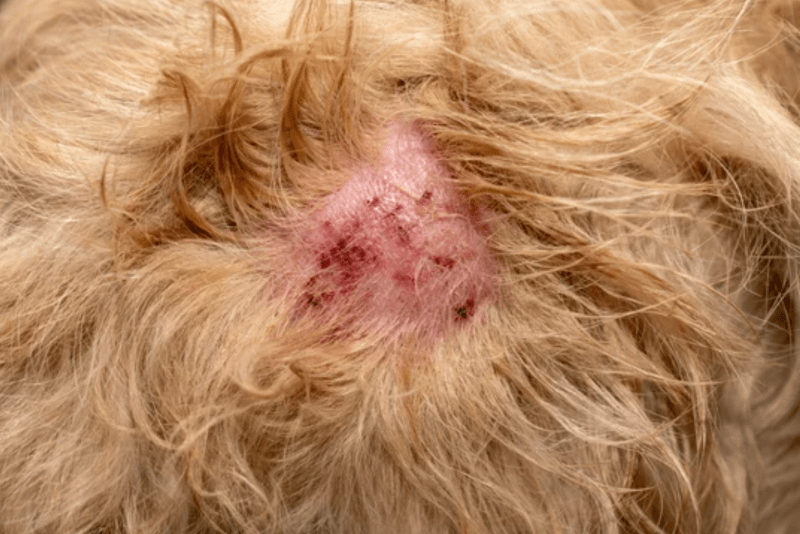
How to support your dog's skin barrier: the ingredients that help (ceramides, lipids, humectants, oat) and why a simpler, barrier-first formula is often better.
Skin resilience is built between baths. Learn simple between-bath care that supports hydration, comfort, and the skin barrier in sensitive dogs.