


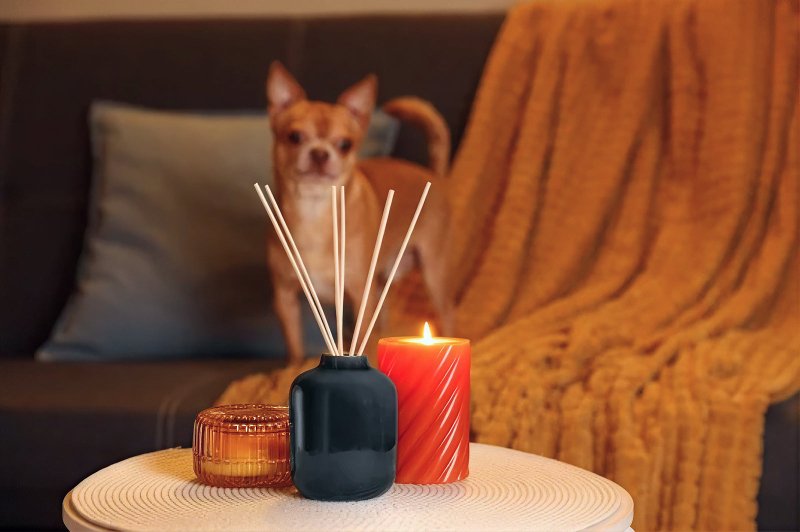
Fragrance & Essential Oils Around Pets: Skin Sensitivity and Safety
Table of Contents
- Why Scent Is a Skin Question, Not a Smell Question
- What "Fragrance" Actually Means on a Label
- How Sensitizers Work
- Essential Oils: Natural Isn't Always Gentle
- Why Pets Are Especially Affected
- Why Many Owners Choose Fragrance-Free
- Essential Oil Safety: When It's More Than Skin Sensitivity
- Essential Oils Commonly Flagged as Toxic
- Why Cats Are at Greater Risk
- Warning Signs and What to Do If You Suspect Exposure
- When to See a Veterinarian
- In Summary
- Frequently Asked Questions
Key Takeaways
- 👃 Pets smell far more acutely than we do, and heavy scent affects them differently than it affects us.
- 🧪 "Fragrance" can hide many undisclosed components, which makes it hard to evaluate for sensitive skin.
- 🔁 Sensitizers can build a reaction over time, even if the first exposures seem fine.
- 🌿 "Natural" doesn't mean gentle, or safe. Some essential oils are skin sensitizers, and several are toxic to pets.
- 🐱 Cats are especially vulnerable to essential oils because they lack key liver enzymes to clear these compounds.
- ☎️ Suspected essential-oil exposure is an emergency, so call your vet or a pet poison hotline right away.
- ✅ Fragrance-free is a low-risk default for reactive skin.
Why Scent Is a Skin Question, Not a Smell Question
Fragrance in grooming products is usually there for the human, since a fresh-smelling pet feels clean. But scent has no skin-health benefit, and for sensitive pets it can be a source of irritation. Thinking about fragrance as a skin question rather than a smell preference reframes the decision.
What "Fragrance" Actually Means on a Label
A single word, "fragrance" or "parfum," can represent a blend of many individual components that aren't disclosed. That lack of transparency is part of why fragrance is hard to assess for a sensitive dog or cat: you can't easily tell what's in it or what your pet is reacting to. Our ingredients-to-avoid guide covers this alongside other common irritants.
How Sensitizers Work
A sensitizer is an ingredient that can trigger a reaction after repeated exposure. The important nuance is timing: a pet may tolerate something at first and develop sensitivity over time. This is why a product that "seemed fine" can later be associated with irritation, and why reducing unnecessary sensitizers is a sensible default for reactive skin. Fragrance and certain essential oils are among the most common sensitizers in grooming products.
Essential Oils: Natural Isn't Always Gentle
Essential oils are frequently marketed as a natural alternative to synthetic fragrance. But many essential oils are themselves sensitizers, and some can be irritating at higher concentrations. "Natural" describes origin, not safety or gentleness. For sensitive skin, the relevant question is how the skin responds, not whether the source is plant-based. (Beyond skin sensitivity, some essential oils can be genuinely toxic to pets, which is covered in the safety section below.)
Why Pets Are Especially Affected
Dogs and cats have a dramatically more sensitive sense of smell than people. A fragrance that seems pleasant and mild to us can be overwhelming to a pet. Beyond comfort, a balanced skin surface, including its microbiome, can be disrupted by unnecessary additives, which is one more reason minimal, fragrance-free, skin-conscious formulas are often preferred. (More on the surface ecosystem in our skin microbiome guide.)
Why Many Owners Choose Fragrance-Free
For pets with sensitive or reactive skin, fragrance-free is a low-risk default. It removes a common irritant with no loss of skin benefit, and it makes it easier to identify what's actually helping or bothering the skin. It's not that every scented product causes problems; it's that fragrance-free removes an unnecessary variable.
Essential Oil Safety: When It's More Than Skin Sensitivity
Everything above is about skin sensitivity: irritation and reactions. There's a separate, more serious layer worth understanding. Some essential oils are genuinely toxic to dogs and cats, through skin contact, inhalation, or ingestion. This isn't about fragrance in a well-formulated grooming product; it's about concentrated oils used or stored in the home. The risk is higher than many pet parents realize, especially for cats, so the sections below cover what to watch for. This is educational and not a substitute for veterinary advice.
Essential Oils Commonly Flagged as Toxic
According to the ASPCA Animal Poison Control Center and Pet Poison Helpline, the essential oils most consistently flagged as toxic to pets include tea tree (melaleuca), pennyroyal, wintergreen, sweet birch, pine, cinnamon, clove, peppermint, eucalyptus, undiluted citrus (d-limonene), and ylang ylang.
Concentration matters a great deal: 100% concentrated oils are far more hazardous than heavily diluted products, and dilution reduces but does not guarantee safety for pets. Because toxicity varies by oil, species, and exposure, the safest approach around pets, especially cats, is to keep concentrated essential oils away from them unless a veterinarian advises otherwise.
Why Cats Are at Greater Risk
Cats are markedly more sensitive to essential oils than dogs, and the reason is metabolic. Cats lack key liver enzymes, the UDP-glucuronosyltransferase (UGT) family, that most mammals use to break down and eliminate many essential-oil compounds, including phenols. Without efficient glucuronidation, these compounds aren't cleared well and can build up to toxic levels (Merck Veterinary Manual). Their grooming behavior compounds the risk, because anything that settles on a cat's fur is likely to be licked off and ingested. For these reasons, many veterinary sources advise avoiding essential oils around cats altogether.
Warning Signs and What to Do If You Suspect Exposure
Signs commonly develop within several hours of exposure and, per Pet Poison Helpline, can include drooling, vomiting, lethargy or weakness, wobbliness (ataxia), loss of appetite, skin/mouth/eye irritation, and difficulty breathing. More severe exposures can involve tremors and other signs of serious toxicity.
If you suspect exposure, especially by ingestion, treat it as an emergency:
-
Contact your veterinarian, an emergency vet, or a pet poison hotline immediately. The ASPCA Animal Poison Control Center is available 24/7 at (888) 426-4435, and Pet Poison Helpline is another 24/7 option.
-
Don't induce vomiting unless a professional tells you to.
-
Remove the source, and if oil is on the coat, keep your pet from grooming it while you get guidance.
-
Bring the product (or a photo of the label) so the clinician knows what's involved.
To reduce risk in a home with pets: keep diffusers in well-ventilated rooms your pet can freely leave, store oils securely out of reach, don't apply essential oils to a pet's skin without veterinary guidance, and be especially cautious (or avoid oils entirely) around cats.
When to See a Veterinarian
For everyday skin reactions: if your pet shows redness, increased scratching, or irritation you associate with a scented product, discontinue it and consult your veterinarian if symptoms persist. For anything that looks like toxic exposure, such as the warning signs above or known ingestion of concentrated oil, contact your vet or a poison hotline right away rather than waiting.
Want simple, science-backed guidance on choosing gentle products? Subscribe to our newsletter.
In Summary
Fragrance and some essential oils can irritate sensitive pet skin, partly because sensitizers build over time and partly because pets experience scent far more intensely than we do, so for reactive skin, fragrance-free, minimal formulas are a sensible default. Separately, several essential oils are genuinely toxic to pets, cats most of all, so concentrated oils should be kept away from pets and any suspected exposure treated as an emergency.
Frequently Asked Questions
Is fragrance-free better for dogs?
For sensitive or reactive dogs, fragrance-free removes a common irritant with no loss of skin benefit, so it's often the safer choice.
What is a sensitizer?
A sensitizer is an ingredient that can trigger a reaction after repeated exposure, which is why something tolerated at first may later be associated with irritation.
Are essential oils safe for dogs and cats?
Some essential oils act as skin sensitizers, and several, including tea tree, wintergreen, pine, cinnamon, citrus, eucalyptus, and peppermint, are flagged as toxic to pets. Cats are especially at risk. "Natural" does not automatically mean safe, so check with your veterinarian before using oils around pets.
Why are essential oils more dangerous for cats?
Cats lack key liver enzymes (UGT glucuronosyltransferases) needed to clear many essential-oil compounds, so these can accumulate to toxic levels, and their grooming increases exposure.
What are the signs of essential oil exposure in pets?
Common signs include drooling, vomiting, lethargy, wobbliness, loss of appetite, and skin or respiratory irritation, often within hours. Contact a vet or poison hotline right away.
What should I do if my pet gets into essential oils?
Treat it as an emergency: contact your veterinarian, an emergency vet, or the ASPCA Animal Poison Control Center at (888) 426-4435. Don't induce vomiting unless told to, and bring the product label.
Resources:
- "Toxic And Nontoxic Plant List," ASPCA
- "Are Essential Oils Dangerous to Pets?" ASPCA Pro
- "Essential Oils," Pet Poison Helpline
- " Toxicoses From Essential Oils in Animals," Merck Veterinary Manual
Read more
Learn which dog grooming ingredients may irritate sensitive skin, sulfates, synthetic fragrance, dyes, and some essential oils, and what to look for instead.
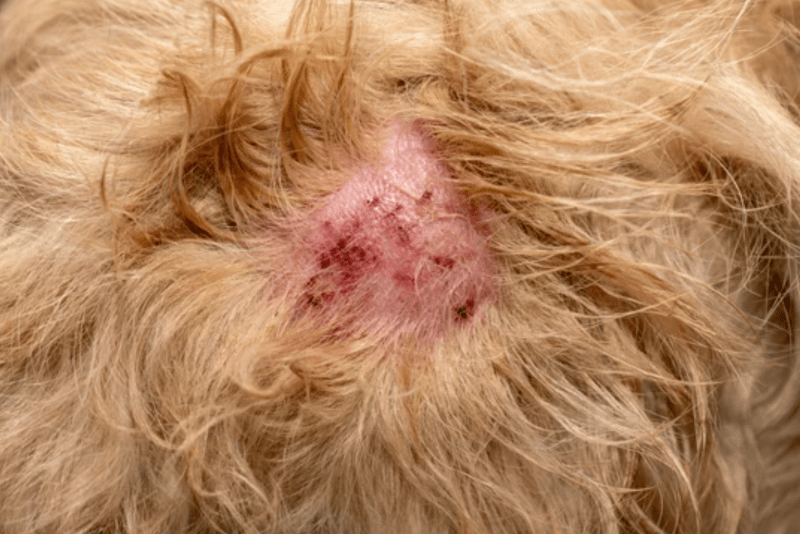
How to support your dog's skin barrier: the ingredients that help (ceramides, lipids, humectants, oat) and why a simpler, barrier-first formula is often better.