





Cat Skin Problems: Common Issues in Cats (and How They Differ)
Table of Contents
- Why Cat Skin Problems Are Easy to Miss
- Common Skin Problems in Cats
- How Feline Skin Issues Differ From Dogs
- Over-Grooming: A Feline-Specific Signal
- Supporting Sensitive Cat Skin
- When to See a Veterinarian
- In Summary
- Frequently Asked Questions
Key Takeaways
- 🐱 Cats hide discomfort, so skin problems are easy to overlook.
- 🔍 Common issues include dryness, dandruff, itching, and over-grooming.
- 🆚 Feline skin differs from canine in structure, behavior, and product needs.
- 👅 Over-grooming is a key feline signal of skin or stress issues.
- 🧴 Lick-safe, fragrance-free support matters more for cats.
- 🩺 Subtle changes deserve a vet's attention.
Why Cat Skin Problems Are Easy to Miss
Cat skin problems often show up as dryness, dandruff, itching, redness, over-grooming with bald patches, or a coat that suddenly looks dull or thin, but cats are masters at hiding discomfort, and their constant self-grooming can mask those early signs. A cat won't always make it obvious that its skin is bothering it, which means skin problems in cats are easy to overlook until they're more advanced.
If you care for a cat and want to recognize common skin issues early, this guide will help you spot what to watch for, understand how feline skin differs from dog skin, know what over-grooming can mean, choose safe skin care approaches, and tell when it's time to call your vet. Knowing what to look for helps you catch problems sooner and give a cat's sensitive skin the right care.
Common Skin Problems in Cats
Cats can experience a range of skin issues, including:
- Dry, flaky skin or dandruff
- Itching and scratching, including excessive scratching
- Redness or irritation
- Over-grooming and bald patches
- Changes in coat texture or condition
- Scabs or small bumps, which can sometimes come with pus from bacterial skin infections
As with dogs, these are signals rather than diagnoses, and common underlying causes include allergic reactions, parasitic infestations, and skin infections. Fleas and mites are parasites that commonly trigger itching and irritation, and environmental allergies and food allergies are also possible causes. Itching in cats is often tied to allergies or an infection, so identifying the underlying cause matters.
A few specific conditions are worth knowing by name: ringworm is a contagious fungal infection that can cause flaky bald spots; feline acne can appear on the chin as blackheads or pustules, sometimes linked to stress or plastic feeding bowls; and contact dermatitis may be tied to household chemicals or sun exposure. These are for recognition, not self-diagnosis, appearance alone often can't tell them apart.
What Makes Cat Skin Unique
Cat skin and grooming have their own distinct characteristics. Cats have delicate skin, groom themselves by licking almost constantly, and tend to be more sensitive to strong scents and handling. These traits shape both how skin problems show up and how they should be supported, so cat skin care calls for an approach built around feline biology. Our companion piece on itchy skin in cats goes deeper on the itch side specifically.
Over-Grooming: A Feline-Specific Signal
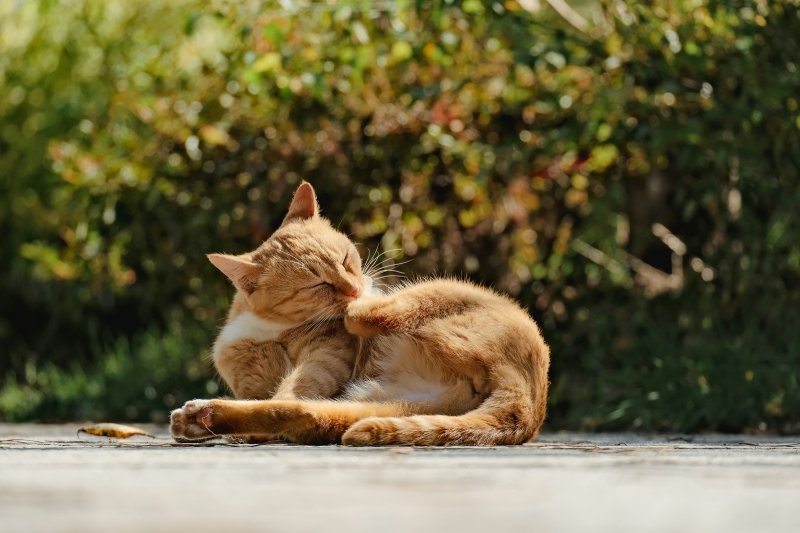
One of the most distinctive feline skin signals is over-grooming. Because cats groom so much normally, excessive licking, chewing, or bald patches from grooming can be easy to miss, but they often indicate skin discomfort, irritation, or stress. When stress leads to excessive self-grooming and hair loss, it is called psychogenic alopecia, and cats may also worsen irritation with their nails while grooming or scratching. Over-grooming is worth paying attention to as an early sign that something may be bothering the skin.

Supporting Sensitive Cat Skin
Supporting a cat's sensitive skin focuses on gentleness and lick-safety. Because cats ingest whatever is on their coat while grooming, gentle, lick-safe skin support for cats, fragrance-free and reviewed for safety, is far better suited to feline care than heavily scented products. Regular grooming also helps you monitor the coat and keep a cat's fur free of irritants.
Minimizing environmental irritants helps too. Residue from household cleaners or air fresheners, for example, can trigger irritation. Gentle support can also include basic ear care, such as keeping the ears clean and watching for buildup or irritation.
When to See a Veterinarian
Because cats hide discomfort, changes deserve attention. Itching in cats is often caused by allergies, infections, or parasites such as fleas and mites; and fleas may still be present even when you don't see them, with flea dirt in the fur sometimes the only clue. Flea allergy dermatitis, a reaction to flea saliva, is a common cause of intense itching.
Contact your veterinarian for persistent itching, over-grooming or bald patches, scabs, sores, hair loss, changes in skin or behavior, or intense ear scratching and head shaking that can point to ear mites. Skin infections can follow parasites like fleas and may require treatment or medication from your veterinarian.
Seek veterinary help right away for a severe allergic reaction: sudden swelling, sneezing, or trouble breathing. These emergencies should not be managed at home.
Want guidance on caring for cats and dogs together? Subscribe to our newsletter for science-backed care tips.
In Summary
Cats experience skin problems like dryness, dandruff, itching, and over-grooming, and common underlying causes include allergies, infections, and parasites, but because cats hide discomfort and self-groom, these issues are easy to miss. Feline skin differs from canine in structure, behavior, and product needs, which makes gentle, lick-safe, fragrance-free support especially important, alongside prompt veterinary attention for changes and proper medical care when an underlying condition is involved.
Frequently Asked Questions
What are common skin problems in cats?
Dry or flaky skin, dandruff, itching, redness, over-grooming with bald patches, and changes in coat condition are among the most common. Common underlying causes include allergies, parasites, and infections.
How are cat skin problems different from dogs?
Cats have delicate skin, groom by constant licking, are sensitive to strong scents, and rarely need bathing, so both the signs and the appropriate support differ.
Why is my cat over-grooming?
Excessive grooming can signal skin discomfort, irritation, or stress, and because cats groom so much normally it's easy to miss. Stress-related hair loss is often called psychogenic alopecia, which simply means over-grooming driven by stress or anxiety. It's worth a vet's attention.
When should I contact a vet right away?
Seek help from a veterinarian immediately if you notice sudden swelling, trouble breathing, vomiting, or other severe symptoms that could point to an allergic reaction. These emergencies should not be treated at home.
How do vets diagnose itchy skin in cats?
Vets usually start by checking for fleas, mites, ringworm, or infection, then may recommend allergy testing, blood work, or a diet trial to see whether food is part of the problem. They may also take a sample from the ear canal if the ears are involved.
What products are safe for a cat's skin?
Gentle, fragrance-free, lick-safe formulas reviewed for cats, since cats ingest what's on their coat while grooming. It's also best to avoid irritants like household chemicals on the skin or coat.
Read more
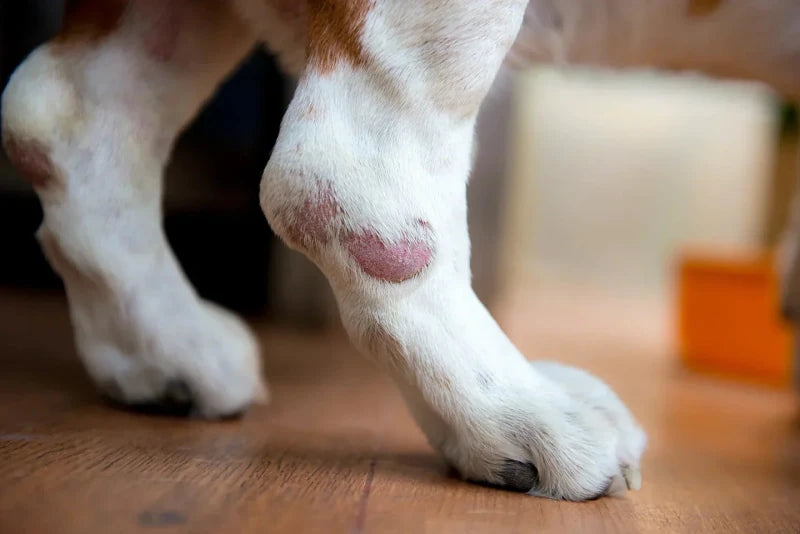
Learn what hot spots and irritated areas on dogs can look like, what may contribute to them, and when irritation needs veterinary attention.
A calm, practical guide to dog skin care ingredients: which help the skin barrier, which sensitive skin needs less of, and why pet-formulated matters.