



How to Brush a Dog’s Teeth: Step-by-Step Guide to Keep Your Pet’s Teeth Healthy
Brushing your dog's teeth might sound tricky, but it’s one of the best ways to keep them healthy and happy. Just like you brush your teeth every day to avoid cavities and bad breath, your dog needs proper dental care too. Skipping it can lead to plaque and tartar, or even painful gum problems for your furry friend.
Table of Contents
- Key Takeaways
- Importance of Brushing Your Dog’s Teeth
- Choosing the Right Toothbrush and Toothpaste
- How to Brush a Dog’s Teeth
- Common Challenges and How to Overcome Them
- How Often Should You Brush Your Dog’s Teeth?
- Conclusion
- Frequently Asked Questions
Key Takeaways
- 🦷 Regularly brushing your dog's teeth is essential for preventing plaque and tartar buildup, and serious dental issues like gum disease or tooth loss.
- 🪥 Use dog-specific toothbrushes and toothpastes that are safe, effective, and can come in dog-friendly flavors like chicken or beef.
- 💚 Gradually introduce brushing by making your pet comfortable with the process using gentle praise, short sessions, and rewards to create a positive experience.
- 🗓️ Aim to brush your dog’s teeth daily for the best results, or at least three times a week to maintain good oral health and fresh breath.
- 🐕 Overcome challenges like fear or resistance by starting slow, being consistent, and using techniques tailored to your dog’s size and needs.
- 🐶 Establishing a brushing routine early, especially with puppies, builds long-term habits that support their overall health.
Importance Of Brushing Your Dog's Teeth
Brushing your dog's teeth helps protect their overall health by drastically reducing dental issues. Without regular care, plaque - a thin film of food particles and saliva - can build up on their teeth. Over time, this hardens into tartar, which leads to gum disease, pain and sometimes even tooth loss. Daily brushing removes plaque before it causes serious problems.
Neglecting their dental hygiene can result in periodontal disease, which affects not just the teeth but also the gums, the ligaments around the teeth, and the jawbone. This condition often progresses without noticeable signs, making prevention crucial. Proper dental care also helps keep your dog's breath fresher. Regular brushing incorporates these benefits into simple, daily care.
Choosing The Right Toothbrush And Toothpaste
Selecting the proper toothbrush and toothpaste is essential for safely and effectively keeping your dog’s teeth clean. Using tools designed specifically for dogs ensures their comfort and safety, and it makes brushing easier for you.
Types Of Dog Toothbrushes
Dog toothbrushes come in several types and often have special features, each designed to suit different needs or preferences.
-
Angled Handles: Ideal for reaching all areas of your dog’s mouth without straining.

-
Multi-Headed Brushes: Clean the tooth surface from different angles at once, improving efficiency.

-
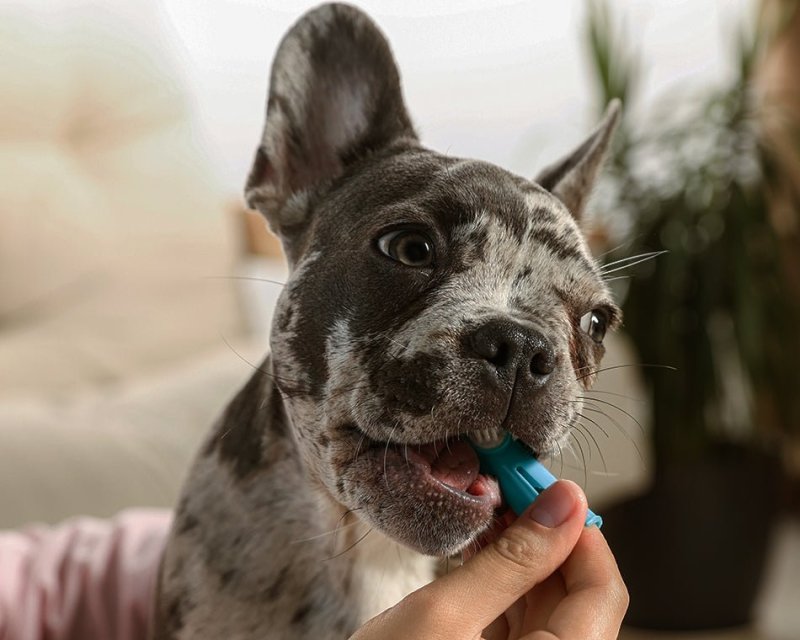
Finger Toothbrushes: Slip over your finger, offering better control, especially for small dogs or beginners. May be less scary for pups averse to tooth brushes.

-
Small Brushes: Compact in size and easy to handle, suitable for dogs with smaller mouths.

Dog-Friendly Toothpaste Options
Always choose toothpaste made specifically for dogs. Human toothpaste often contains harmful ingredients like xylitol and fluoride, which are toxic to dogs.
Many dog toothpastes are enzymatic, which helps soften plaque, and is safe for them to swallow. Flavor options like chicken, beef, and peanut butter make brushing feel more like a treat. Trying different flavors can help you find the one your dog enjoys most, making the process easier and more pleasant. The action of brushing off plaque is more important than the use of toothpaste.

How To Brush A Dog’s Teeth: Step By Step
Brushing your dog’s teeth can be simple when done systematically. Follow these steps to ensure comfort for both you and your pet while maintaining their dental health.
Preparing Your Dog For Brushing
Select a quiet and calm space to reduce distractions. For small dogs, keeping them on your lap may offer easier access and control. Start by softly rubbing your dog’s teeth and gums with your finger or a soft cloth in a back-and-forth motion. Focus on the gum line to help them adjust to mouth handling. Let them taste the dog toothpaste from your finger first. Introduce the toothbrush with toothpaste only when they seem comfortable. A quick brush beforehand can help your dog relax—Welltayl’s Bath Brush keeps them comfortable and easier to handle.
Proper Brushing Techniques
Use a dog toothbrush or a soft-bristle brush, depending on your pet’s size and preference. Apply a small amount of dog-specific toothpaste to the brush.
Begin with the larger canine teeth, using gentle side to side and circular motions. Gradually lift the upper lip to access the molars. Clean the gum line effectively without scrubbing too hard to avoid discomfort to the gums. Brush outer surfaces of all reachable teeth on both sides for thorough cleaning. It is typically not feasible to brush the inner surface of a dog’s teeth, and fortunately, tartar formation is most prevalent on the outer surface.
Creating A Positive Experience
Encourage your dog with gentle praise during every step. Start with shorter sessions and increase brushing time as they adjust. Offer a small reward, like a dental treat or playtime with their favorite toy, immediately after brushing. This builds positive associations with the activity over time.
4 Common Challenges And How To Overcome Them
1. Dog’s Resistance or Fear
Gradual introduction of the toothbrush and toothpaste can help ease fear. Start by letting your dog taste pet-safe toothpaste, followed by rubbing it on their teeth with your finger. Use short sessions filled with praise and treats to create positive feelings around brushing. Be patient and never be forceful as this could create an aversion.
2. Difficulty Accessing All Teeth
Access back teeth by gently lifting your dog’s lips and working from their front teeth back towards their molars. Brush in small, side to side and circular motions focusing on the external surface of the teeth. Do not worry about accessing the inner surface of the teeth.
3. Gum Sensitivity or Bleeding
Light bleeding along the gum line can occur initially. Brush gently with a soft-bristled or silicone finger toothbrush. Consult your vet if bleeding continues beyond a few initial sessions.
4. Lack of Regular Routine
Consistency improves your dog’s dental health. Aim to brush at least three times a week, but daily, if possible. Reward brushing with a small dental treat or favorite toy to make it a habit and keep it fun for both of you. Try to perform brushing at the same time every day so it becomes part of the routine, i.e. before your brush your teeth or after you feed them dinner.
Does your dog have quirks or needs that make brushing extra challenging? Looking for tips? Sign up for the Welltayl newsletter. You'll get practical advice, dental care hacks, and the latest updates to keep your dog happy and healthy.
How Often Should You Brush Your Dog's Teeth?
Brushing your dog's teeth daily is the most effective way to ensure consistent oral health and prevent dental disease. This routine helps remove plaque and food particles, improves breath, and keeps gums healthy. Research shows that frequent dental care not only supports clean teeth but can reduce the risk of cardiovascular disease.
If brushing every day feels overwhelming, aim for at least three times a week. Studies suggest this frequency is enough to see benefits in maintaining oral hygiene. Brushing once a week provides some advantages, but higher frequency is more effective in reducing plaque buildup.
For puppies, create a brushing routine early so they get used to it. Dogs of any age can adapt, but it's easier to introduce brushing when they're young. Consistent brushing reinforces good habits and helps avoid retraining due to irregular schedules.
By keeping a regular teeth-brushing routine, you're safeguarding your dog's oral and overall health. Make it part of your daily routine, like feeding or walking, to ensure you don't miss it.
Conclusion
Caring for your dog’s teeth is an essential part of keeping them healthy and happy. By making dental care a regular and positive experience, you’re not only preventing potential health issues but also strengthening your bond with your furry friend. With the right tools, techniques, and a little patience, you can turn brushing into a routine your dog looks forward to. A healthy smile means a healthier, happier life for your pup - and peace of mind for you.
Frequently Asked Questions
Why is it important to brush my dog's teeth?
Brushing your dog's teeth is crucial for reducing plaque buildup, gum issues, and conditions like periodontal disease. It also improves their breath, reduces oral inflammation, and supports overall health and comfort.
Can I use human toothpaste to brush my dog's teeth?
No, human toothpaste is not safe for dogs and can be toxic. Always use dog-specific toothpaste.
How often should I brush my dog's teeth?
For optimal dental health, aim to brush your dog's teeth daily. If that's not feasible, brushing at least three times a week can still provide significant benefits.
Resources
Read more

Learn how to spot, treat, and prevent dog ear infections with expert tips. Discover causes, symptoms, and safe home care strategies to keep your dog healthy.
Discover how emotional support dogs improve mental health, provide comfort, and help with anxiety or PTSD. Learn how to qualify and understand legal rights!